Sign Manifesto

* Email will not be shown anywhere
Thanks for reaching out!
Oops! Something went wrong while submitting the form.
COMMUNITY ENGAGEMENT

200+

Workshop Participants

24

Member Organisations in Stakeholders Consortium

9

Workshops

2

Roundtable sessions

Beyond Bias - Making AI More Inclusive

Beyond Bias, a Gooey.AI and Goethe-Institut India partnership, reimagines generative AI through participatory practices, creating inclusive datasets and tools that honor diversity and drive innovation.

Goethe-Institut India promotes German language and cultural exchange through a wide network of six main institutes in major metros like Delhi, Mumbai, Bengaluru, Chennai, Kolkata and Pune, plus additional Goethe-Zentrum centres. It offers internationally-recognized German courses, cultural programmes, libraries, and study-work guidance, strengthening Indo-German collaboration and broad access to German culture across the country.

The Mozilla Data Collective is an initiative by Mozilla Foundation that supports researchers studying the social impact of technology.
It provides access to privacy-preserving, platform-sourced datasets to enable independent, public-interest research on issues like online misinformation, elections, and digital rights.

COMMUNITY ENGAGEMENT
100+
Workshop Participants
24
Member Organisations in Stakeholders Consortium
6
Workshops
2
Roundtable sessions

Theory of Change

The Problem of Visual Bias in AI
Generative AI is riddled with bias which reflects the systemic power imbalances in the world. An AI-driven culture must demand accountability and ecological considerations as well. Gooey.AI, in collaboration with Goethe-Institut, is reimagining a future where generative AI embraces and reflects the rich diversity of human experiences. 
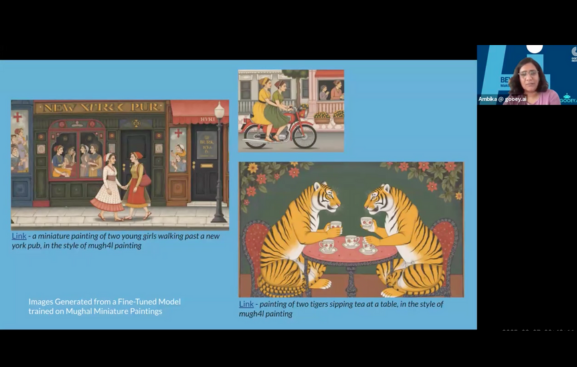
Screenshot of sample images generated from a model fine-tuned with our prototype tool on Mughal miniatures being shared by Ambika Joshi, Head Dev Outreach, Gooey.AI
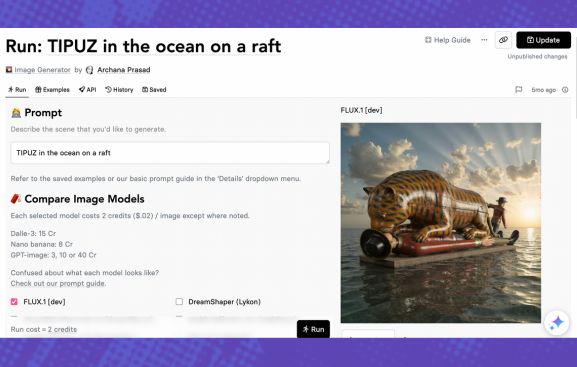
Screenshot of sample images generated from a model fine-tuned with our prototype tool on Mughal miniatures being shared by Ambika Joshi, Head Dev Outreach, Gooey.AI

By crafting culturally representative image datasets and fine-tuning AI models, we aim to confront biases head-on and develop tools that are culturally sensitive, technically innovative and created with participatory design processes.
Screenshot of our prototype tool enabling anyone to generate images using text prompts
Screenshot of our prototype tool enabling anyone to generate images using text prompts

This project invites artists, creators and stakeholders in the creative industries to exemplify a collaborative process of creating and using AI tools that curate and compile culturally nuanced datasets and fine-tuned AI models, thus moving towards an equitable and inclusive digital future

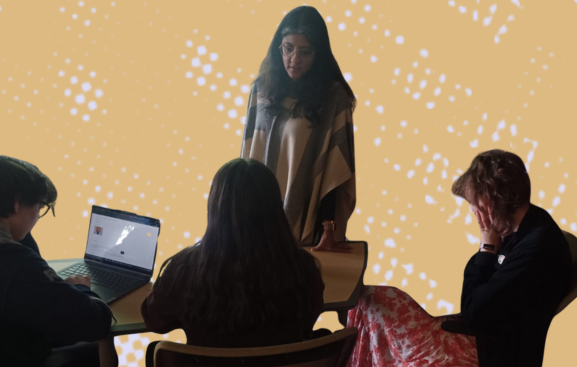
Archana Prasad, Founder & CCO Gooey.AI, conducts Beyond Bias workshop for 11th grade students at UPrep Seattle

Context & Research
Bias in AI training data
Key data on AI bias reveals that most models are Western-centric, influencing users to adapt to dominant cultural norms and often sidelining local languages and values. Access to advanced AI tools remains uneven, with significant portions of the global population excluded, which limits diversity and reinforces existing societal inequalities.

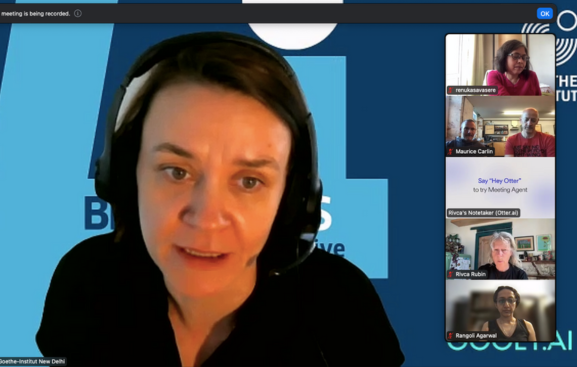
Dr. Anja Riedeberger, Director, Goethe-Institut & project partner discusses importance of making AI more inclusive at Roundtable 1
Power imbalances accentuate AI model bias
AI training data often reflects historical and intersectional biases, erasing diverse experiences. Tool design and governance show power imbalances and neglect consent, ownership, and community voices. Image-based models raise issues of cultural appropriation, misrepresentation, underrepresentation, and provenance.

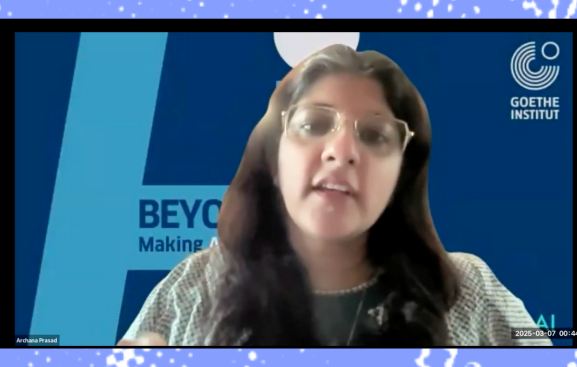
Archana Prasad, Founder & CCO, Gooey.AI engages cultural stakeholders on Manifesto making at Roundtable 2

Key research
Recent research from USC Viterbi (2022) underscores the scale of the problem,
finding that up to 38.6% of “facts” used by AI models are biased. Further studies by IBM and Harvard's Centre For Research on Computation and Society also show there is a critical need for more inclusive and culturally representative AI.
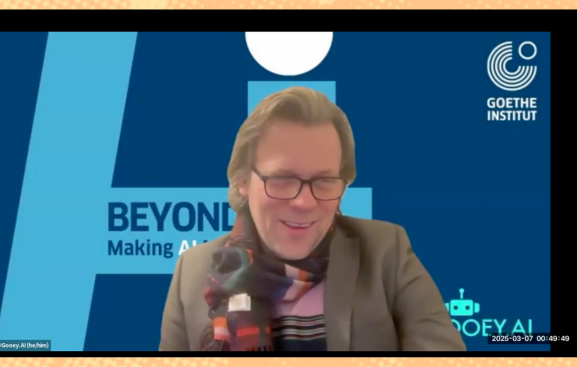
Sean Blagsvedt, Founder & CEO of Gooey.AI showcases iterative prototype development to project partners

Interventions & Process
Collaborative roundtables and workshops
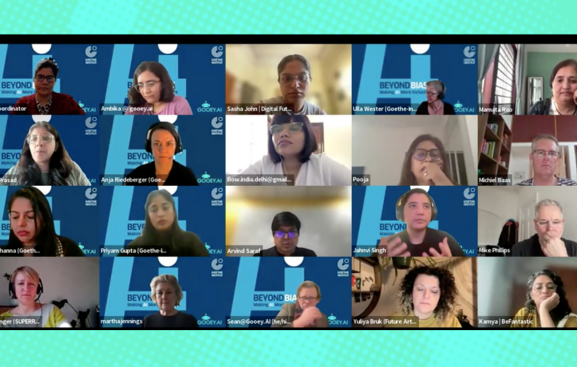
Engaged key stakeholders across India, Germany, US and UK in discussions to understand the profound effects of bias in AI and co-author a living manifesto guiding best practices in building AI image tools.

Global cultural stakeholders engaged in Roundtable
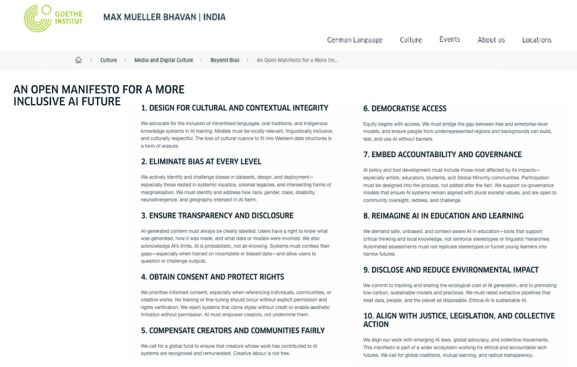
Manifesto development and refinement
We drafted core principles to address bias based on initial insights from the roundtables. We also incorporated participant feedback from polls and breakout sessions to ground the manifesto in real-world examples.

Screenshot of the Open Manifesto on Project partner Goethe-Institut’s website
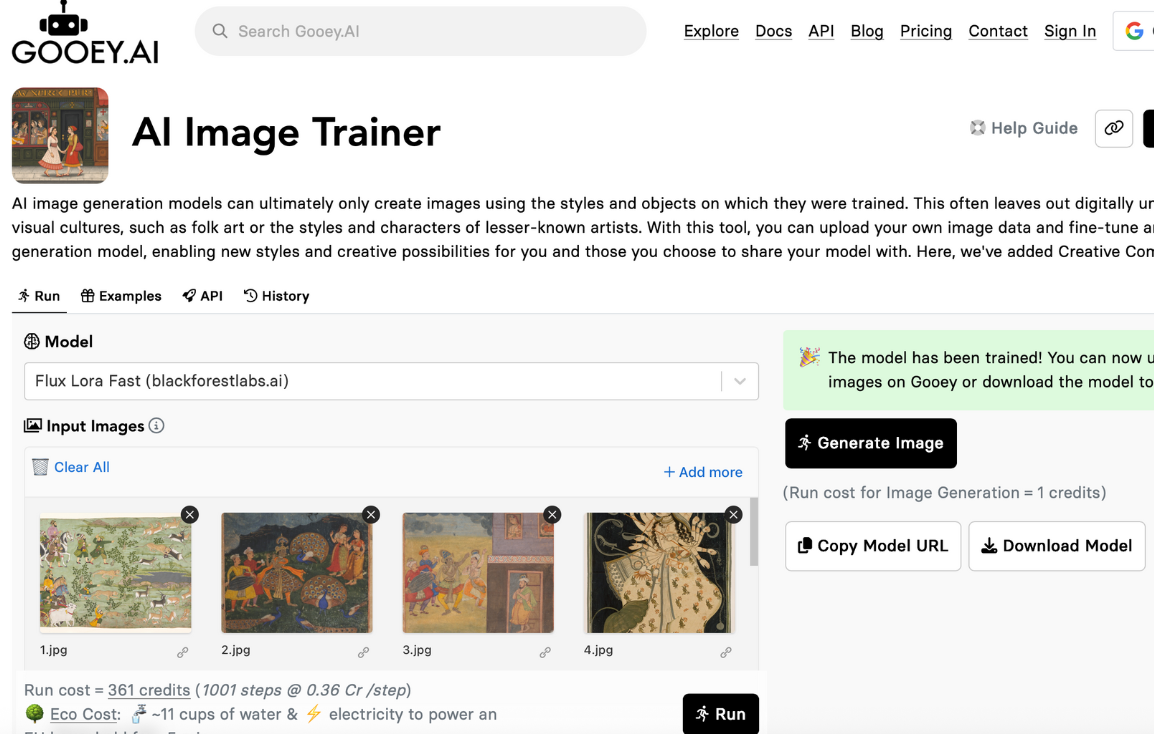
Image training tools
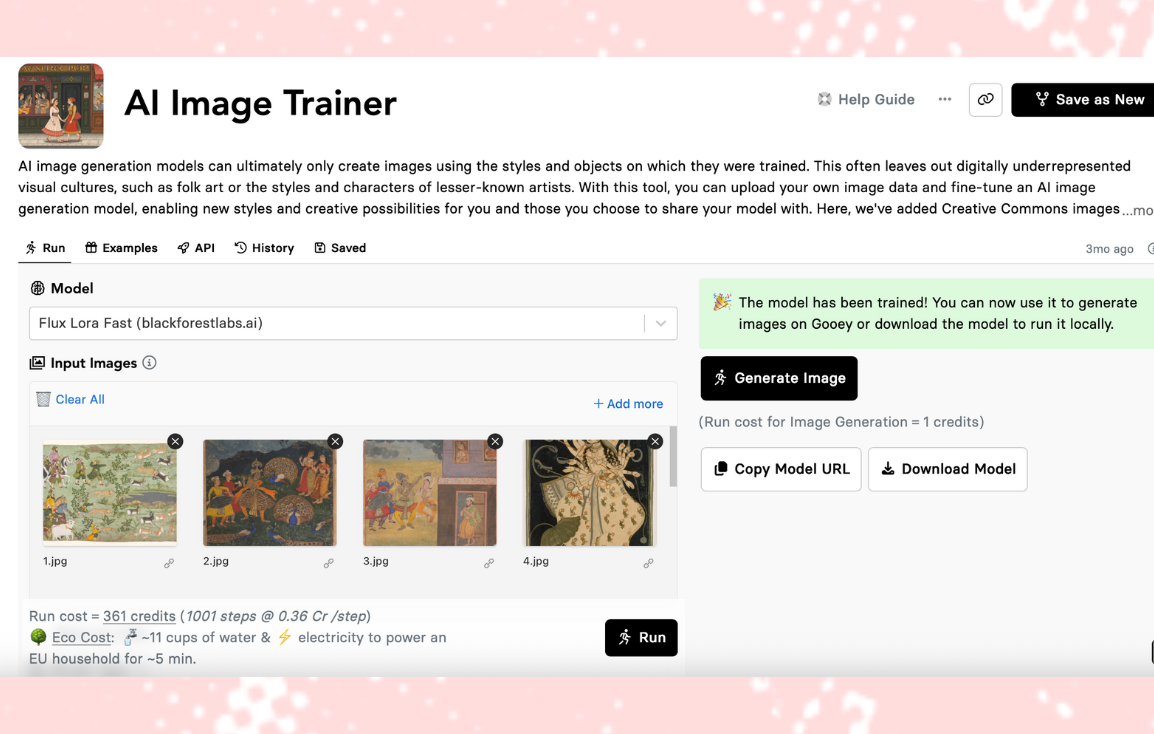
We created AI Image Trainer, where practitioners can upload under-represented image-sets to create fine-tune image models. These can then be used in our Image Generator to visualize any scene in the style of the image-set.

Screenshot of prototype custom fine-tuning trainer tool

Outcomes
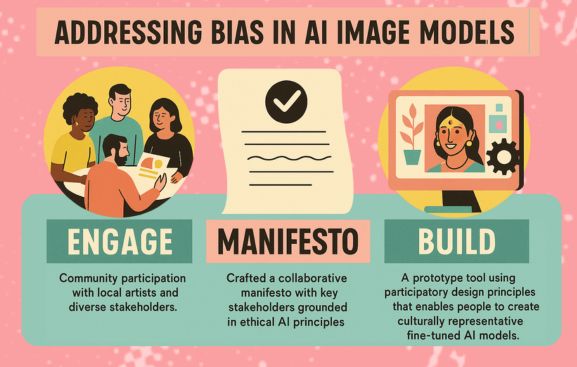
Addressing bias in AI image models collaboratively
Gooey engaged community participation and involved local artists and diverse stakeholders. We developed a collaborative manifesto with key stakeholders grounded in ethical AI principles, and by designing a prototype tool using participatory design principles that enables people to create culturally representative fine-tune AI models. 
Global consortium of key stakeholders
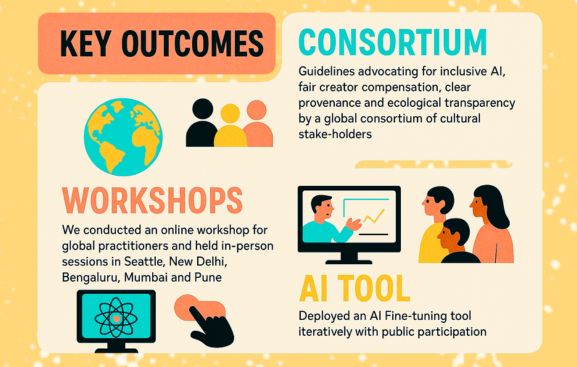
A global consortium of cultural stakeholders created guidelines for inclusive AI, fair creator compensation, clear provenance, and ecological transparency. Workshops held online and in Seattle, New Delhi, Bengaluru, Mumbai, and Pune fostered dialogue, while an AI fine-tuning tool was co-developed through active public participation.
Community insights lead AI tool development
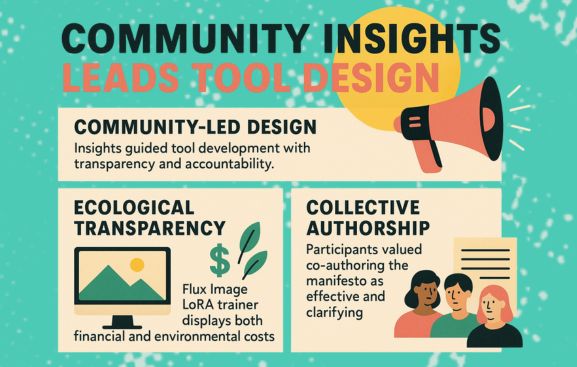
Community insights shaped our tools with transparency and accountability. The Flux Image LoRA trainer reveals both financial and ecological costs of image runs, highlighting environmental impact. Beyond tools, participants valued co-authoring the open manifesto as a clarifying act of collective authorship.
Taking the Initiative Forward
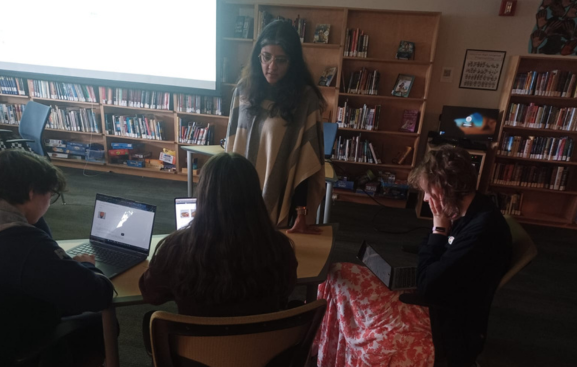
Workshop at UPrep
On 21 May 2025, we hosted a workshop with 40 eleventh-grade students at UPrep, Seattle, introducing them to AI bias in imagery through a hands-on session. Students experimented with the Gooey Image Trainer, creating their own custom models and exploring how training data shapes AI outputs.

The workshop also opened conversations around AI ethics, environmental impact, representation, and protecting artists’ rights. The session was led by Archana Prasad, with Nancy Schatz Alton, Ezra Dickinson, and Ty Talbot joining as speakers.
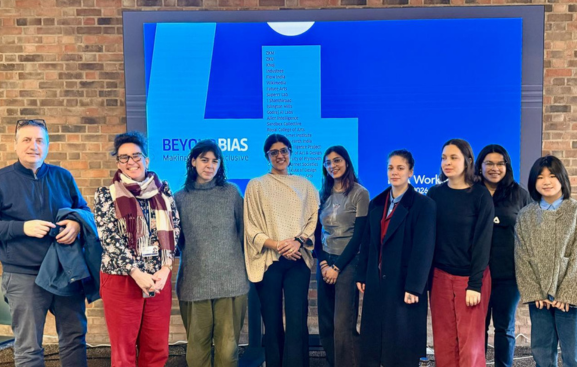
Workshop at the Royal College of Art
On 19 February, 2026 at the Royal College of Art (RCA), London, the Beyond Bias workshop brought together participants to shape AI tools with transparency and accountability.

Participants explored the Gooey Image Trainer and Video Generator tools, creating images and videos in their unique styles. The session, which was hosted by our Founder and CCO Archana Prasad, also focused on collectively reading the open manifesto, reflecting a shared effort to build more inclusive AI systems.
Stakeholders’ feedback
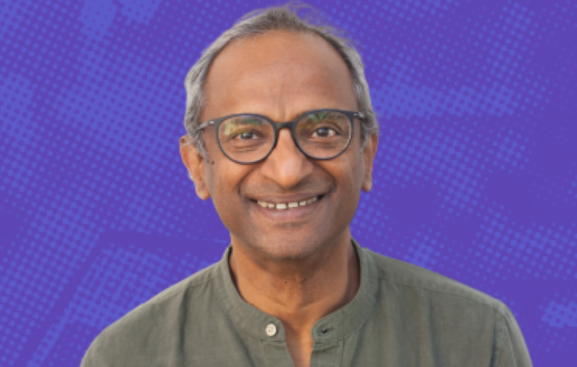
Jacob Mathew
Principal Advisor, Industree Foundation

“The Beyond Bias initiative gave me a sense of wielding a machete to cut a way through the jungle of AI bias, with a bunch of intrepid fellow explorers...”
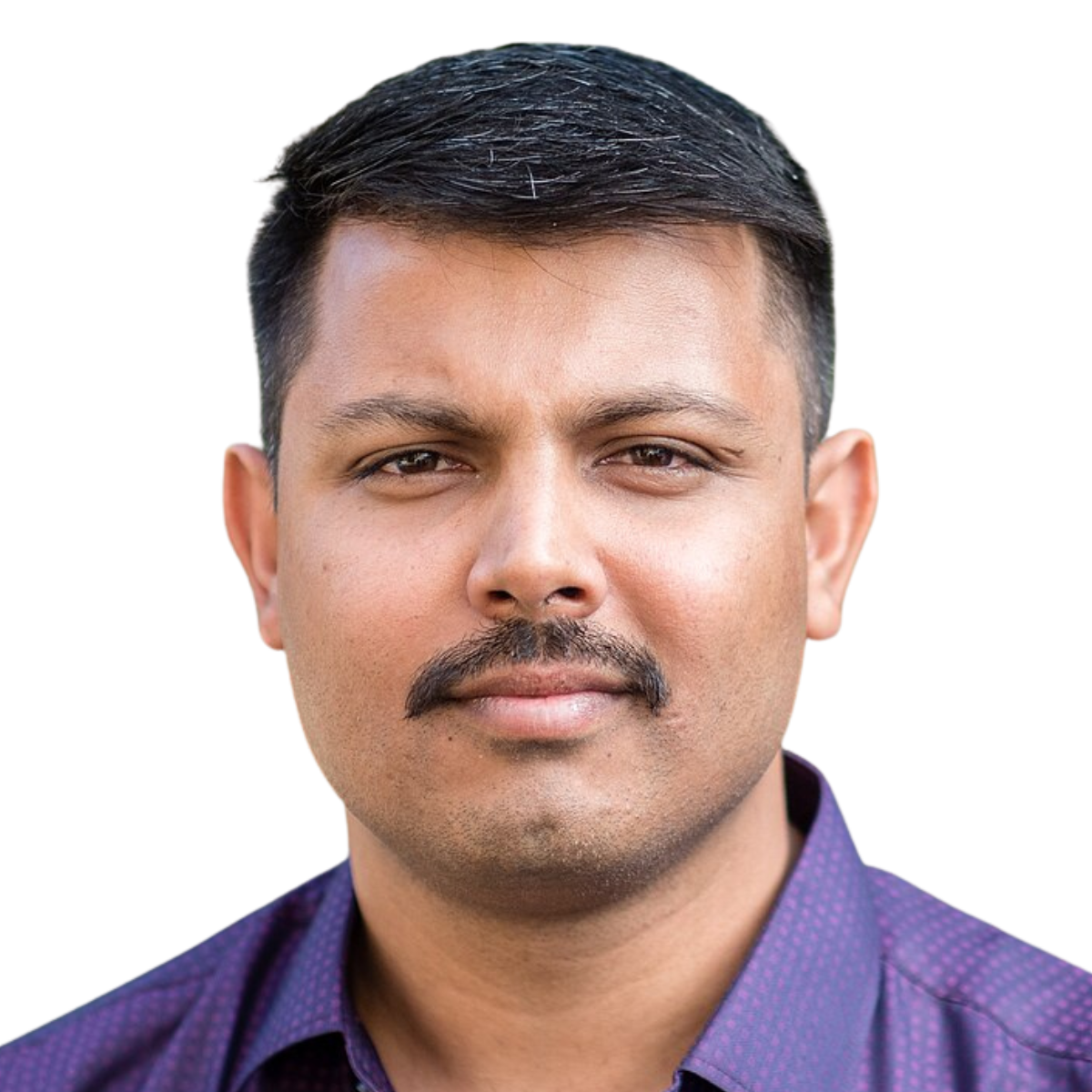
“The conversation wasn’t only on developing or improving AI models but on questions of bias and representations into the (dataset) feeder mechanism itself. I thoroughly enjoyed participating in the workshop.”

Tanveer Hasan

Executive Director, Centre for Internet and Society

Open Manifesto

An Open Manifesto For A More Inclusive AI Future

1. Design For Cultural And Contextual Integrity

We advocate for the inclusion of minoritised languages, oral traditions, and Indigenous knowledge systems in AI training. Models must be locally relevant, linguistically inclusive, and culturally respectful. The loss of cultural nuance to fit into Western data structures is a form of erasure.

2. Eliminate Bias At Every Level

We actively identify and challenge biases in datasets, design, and deployment—especially those rooted in systemic injustice, colonial legacies, and intersecting forms of marginalisation. We must identify and address how race, gender, class, disability, neurodivergence, and geography intersect in AI harm.

3. Ensure Transparency And Disclosure

AI-generated content must always be clearly labelled. Users have a right to know what was generated, how it was made, and what data or models were involved. We also acknowledge AI’s limits. AI is probabilistic, not all-knowing. Systems must confess their gaps—especially when trained on incomplete or biased data—and allow users to question or challenge outputs.

4. Obtain Consent And Protect Rights

We prioritise informed consent, especially when referencing individuals, communities, or creative works. No training or fine-tuning should occur without explicit permission and rights verification. We reject systems that clone styles without credit or enable aesthetic imitation without permission. AI must empower creators, not undermine them.

5. Compensate Creators And Communities Fairly

We call for a global fund to ensure that creators whose work has contributed to AI systems are recognised and remunerated. Creative labour is not free.

6. Democratise Access

Equity begins with access. We must bridge the gap between free and enterprise-level models, and ensure people from underrepresented regions and backgrounds can build, test, and use AI without barriers.

7. Embed Accountability And Governance

AI policy and tool development must include those most affected by its impacts—especially artists, educators, students, and Global Minority communities. Participation must be designed into the process, not added after the fact. We support co-governance models that ensure AI systems remain aligned with plural societal values, and are open to community oversight, redress, and challenge.

8. Reimagine AI In Education And Learning

We demand safe, unbiased, and context-aware AI in education—tools that support critical thinking and local knowledge, not reinforce stereotypes or linguistic hierarchies. Automated assessments must not replicate stereotypes or funnel young learners into narrow futures.

9. Disclose And Reduce Environmental Impact

We commit to tracking and sharing the ecological cost of AI generation, and to promoting low-carbon, sustainable models and practices. We must resist extractive pipelines that treat data, people, and the planet as disposable. Ethical AI is sustainable AI.

10. Align With Justice, Legislation, And Collective Action

We align our work with emerging AI laws, global advocacy, and collective movements. This manifesto is part of a wider ecosystem working for ethical and accountable tech futures. We call for global coalitions, mutual learning, and radical transparency.
We, the undersigned, commit to building an AI future that is just, plural, and rooted in inclusivity:

A.I.Collective, Berlin, Zurich, London

Ambika Joshi - Head of Developer Relations, Gooey.AI, Netherlands

Amaresh Anand - Sandeep Khosla Associates & AAD, India

Anja Riedeberger - Director Information Services South Asia, Goethe-Institut New Delhi, India

Anna Czoski - Future Arts, USA

Archana Prasad - Founder & Chief Creative Officer, Gooey.AI, UK

Arpit Kaur Bhatia - Khoj, India

Arundathi Mitter - Flow India, India

Arvind Saraf - MSR Turing Team, India

Bidisha Sahoo - Khoj, India

Elisa Lindinger - Superrr Lab, Germany

Gauri Pathak - Khoj, India

Isha Singh - Communications Manager, Gooey.AI, India

Jacob Mathews - Industree Foundation / Srishti Manipal Institute of Art, Design and Technology, India

James Coupe - Royal College of Art, UK

James Padolsey - Collective Intelligence Project, UK

Jahnvi Singh - Oxford Cultural Leaders, UK

John Xaviers - India Foundation for the Arts, India

Kamya Ramachandran - BeFantastic, Singapore

Mamatha Rao - National Institute of Design, India

Menaka Rodrigues - India Foundation for the Arts, India

Michael Puntschuh - Beyond AI Collective, Germany

Michiel Baas - University of Amsterdam, Netherlands

Mike Phillips - I-DAT, University of Plymouth, UK

Pooja Sood - Khoj, India

Priyam Gupta - Assistant Librarian and Project Coordinator, Goethe-Institut New Delhi, India

Primavera De Filippi - Alien Intelligence, France

Ruchika Dhillon - Program Fellow at Khoj, India

Sasha John - Digital Futures Lab, Canada

Sean Blagsvedt - Founder & CEO, Gooey.AI, UK

Shirin Shinde - Godrej AI Lab, India

Sunayana Sitaram - Microsoft Research India, India

Suresh Jayaram - 1ShanthiRoad Gallery, India

Tanveer Hasan - The Center for Internet and Society, India

Tom Simmons - Royal College of Art, UK

Ulla Wester - Head of Library Services, Goethe-Institut New Delhi, India

Yuliya Bruk - Future Arts, USA

Book a demo with us now and experience the future of AI-driven solutions firsthand.