Sign Manifesto

* Email will not be shown anywhere
Thanks for reaching out!
Oops! Something went wrong while submitting the form.
COMMUNITY ENGAGEMENT

20

RadBots and Artists

4

Countries

10000+

AI & Human conversations

4

International Exhibitions

RadBots: A Collective of Conversational Videobots
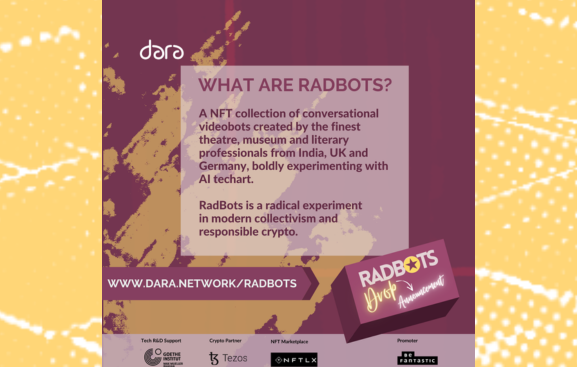
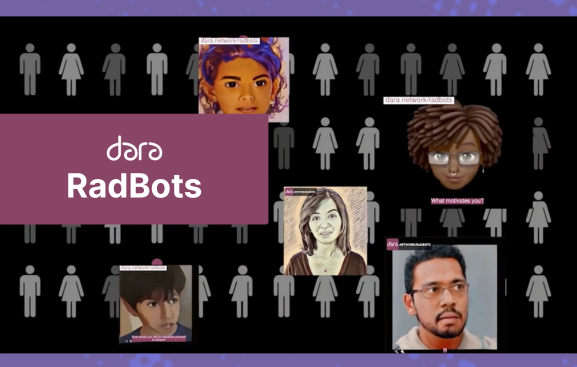
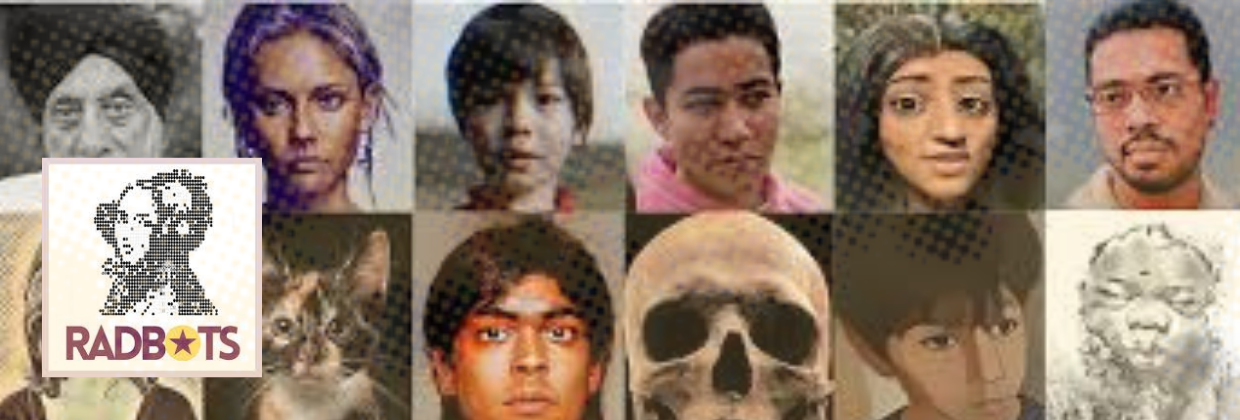
An initiative conceptualised and powered by Gooey.AI (formerly known as Dara.Network) in 2020 with the support of Goethe-Institut. It supported a group of global artists to create AI characters that give voice to under-represented communities or issues. This case study is for arts and cultural organisations, creative technologists, and digital curators, working at the intersection of art, technology, and social impact, to understand how artistic experimentation can meaningfully shape the future of AI and cultural storytelling.

The Goethe-Institut is Germany’s official cultural institute and one of the world’s most recognised cultural brands, with 150+ centres in nearly 100 countries. Operating with an annual budget of around €239 million, it brings substantial institutional capacity and global reach. Beyond its renowned language and cultural programmes, the Goethe-Institut is a powerful convener—linking universities, civil society, cultural organisations, and policy actors to drive meaningful, cross-border societal impact.
The British Council India builds connections, understanding and trust between the UK and India. Drawing on the UK’s strengths in culture, education and English, they work in over 200 countries and territories, with a presence in more than 100. They are a UK charity governed by Royal Charter, taking a long-term, independent approach to fostering global opportunity and collaboration.In 2022–23, they reached 600 million people through their programmes, partnerships and learning pathways.

BeFantastic is a TechArt platform that engages a vibrant international community of TechArt creators and experts to push the boundaries of technology and the arts. Birthed from the experiences of Jaaga.in a social experiment that started in 2009, BeFantastic carries forth the ethos of innovation in the tech & arts, with a deep focus on community.

COMMUNITY ENGAGEMENT
20
RadBots and Artists
4
Countries
10000+
AI & Human conversations
4
International Exhibitions

Theory of Change

The Problem: Systemic Exclusion in AI’s Design and Development
From Radbots to Gooey.AI
AI systems have largely been shaped by a small WEIRD (Western, Educated, Industrialized, Rich, Democratic) demographic. This concentration of authorship produces technologies with limited cultural representation, flattened narratives, and a constrained worldview that does not reflect the multiplicity of global human experience. As a result, many communities find AI tools misaligned with their languages, aesthetics, social realities, and values.

Systemic gaps in AI
These gaps are reinforced by development pipelines that routinely exclude cultural stakeholders such as artists, craft practitioners, community archivists, and local knowledge holders, from the iterative design and testing of AI tools, systems, and platforms. Without their participation, the resulting technologies lack contextual nuance, misinterpret cultural meaning, and often reproduce historical asymmetries in power and representation.

The need for inclusive AI
For practitioners in the Global South, especially women and marginalized communities, opportunities to engage with AI are scarce. Most do not have coding or machine-learning skills, and access to tools, training, and peer networks remains limited. These barriers restrict their ability to shape AI’s voices and stories, underscoring the need for inclusive, culturally grounded approaches that broaden participation and lower technical thresholds.

Background and Needs
The gaps we identified
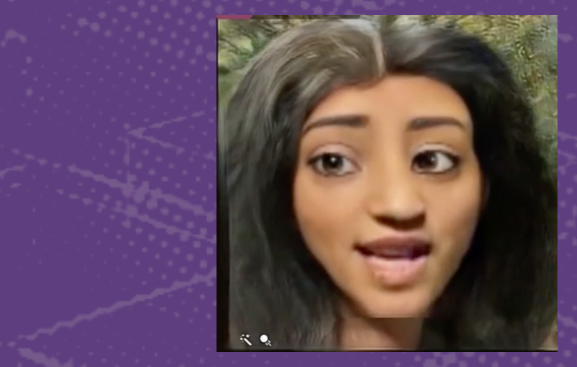
There are few accessible platforms for non-technical artists to experiment with conversational AI, as well as limited representation of South Asian narratives in generative AI. AI research, theatre, and storytelling communities barely interact with each other, leading to stilted AI agents which serve only as assistants. RadBots reimagined AI assistants as cultural and performative beings.

Launching the fellowship
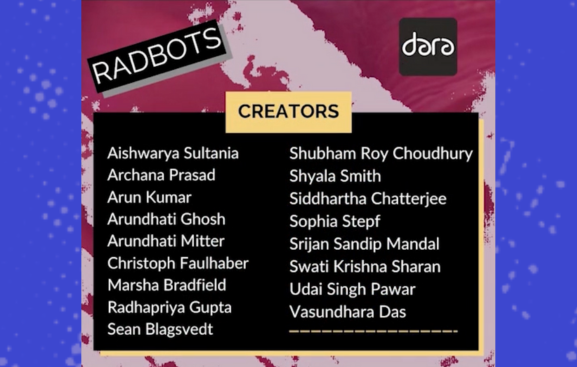
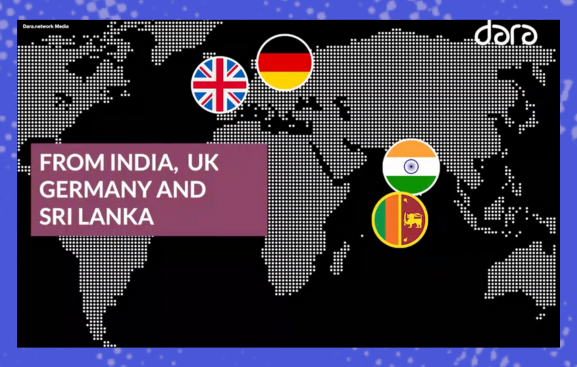
To challenge these gaps, Dara.network/Gooey.AI initiated the RadBots Fellowship, bringing together 20 playwrights, poets, and artists from India, Sri Lanka, the UK, and Germany. The cohort explored questions of identity, authorship, and ethics through hands-on creation of AI-driven characters.
Building creative labs
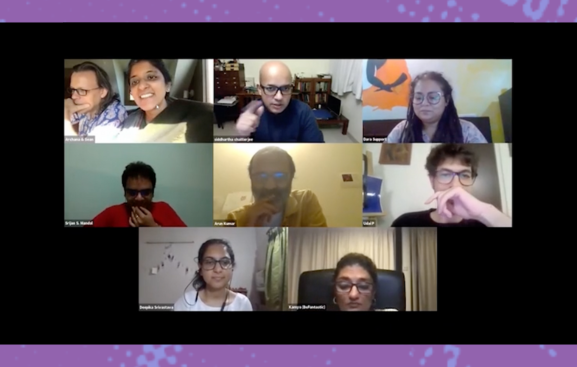
We created a hybrid Fellowship and Lab that empowered artists—many without any prior technical experience—to design their own RadBots: distinctive AI personae shaped by lived experience, nuance, and intentionality. Our weekly sessions brought authors, technologists, and cultural practitioners into conversation, exploring how to craft opinionated, context-rich AI characters while engaging deeply with the evolving state of AI.
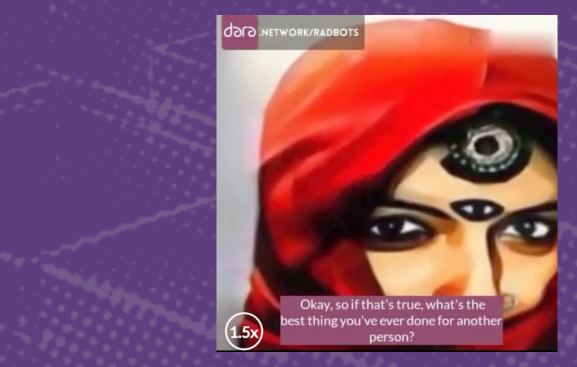
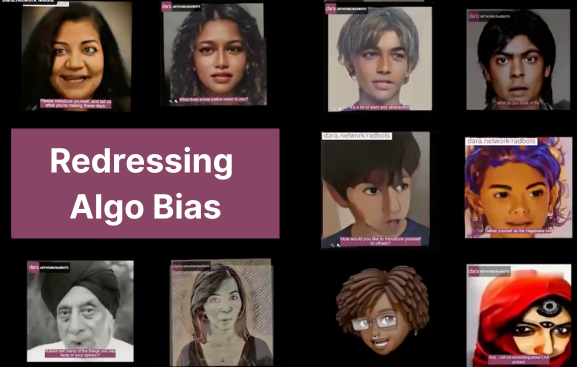
The resulting RadBots—Jara Bot, Renji, Afro Hudgi, and others—amplified voices and stories that rarely appear in mainstream discourse: surrogates, tribal artists, African students navigating life in India. Each bot became a small act of cultural redress, drawing attention to narratives that are often overlooked or flattened, and revealing the power of inclusive AI when shaped through community, dialogue, and creative agency.
Interventions & Process
A platform for fair participation
We provided a platform for non-technical creators to build conversational agents (RadBots) powered by large language models like GPT-3. The RadBots were released as a limited-edition NFT, providing a transparent framework for creative ownership. 30% of NFT proceeds were pooled into the RadBot DAO (RADAO), whose charter is to fund the under-represented communities the AI-powered RadBots serve.
Impact and reach
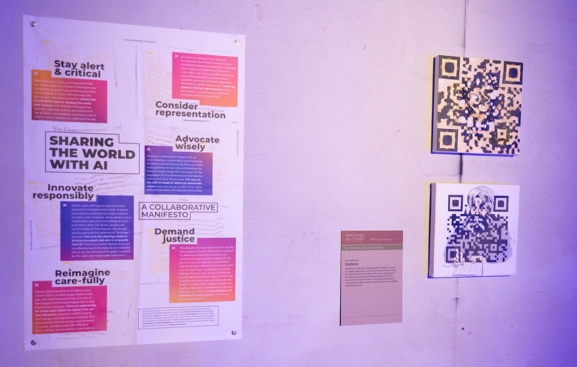
This initiative created 20+ RadBots which had 10000+ interactive conversations between audiences and AI characters during exhibitions. Fellows also co-authored a manifesto outlining shared values for inclusive, ethical AI storytelling. This initiative was also showcased at India Art Fair 2022 and Ars Electronica 2023, where it was widely appreciated for its inclusivity.

Outcomes
AI for a creative economy
RadBots created an ecosystem that leverages technology, creative practices, and partnerships to strengthen a wide range of voices championing mutual respect, social justice, and freedom of expression. RadBots are different from usual AI agents, as they are opinionated and provide insightful commentary on the human condition from their uniquely crafted perspective.
Democratizing AI for creators
RadBots developed a creative workflow for artists and creators without technical knowledge to experiment with AI. It created an inclusive and innovative space to democratize AI for everyone. Along with that, the RADAO model embodies creative and financial participation, with fair and transparent compensation for creators.

RadBots Manifesto

This Manifesto has been drafted to reflect the collective visioning of the values and financial agreements of the RadBot Fellows. The collective and the contents of document emerged through a process  facilitated by Gooey/Dara team in consultation with external experts to facilitate the RadBot Fellows to define their values by responding to the following provocations:

- How do we articulate value, and a fair financial agreement on NFTs, for our work together?
- What is the value of the RadBots project to us and others?
- What does a fair financial model look like?
- What brings us together as a collective?

The step-by-step process that Dara’s team has followed to arrive at this manifesto from the thoughts and priorities of the RadBots Fellows is detailed here. Link to Miro Board

We believe in highlighting hidden figures and their voices from fiction, history, our own imaginations and lived experiences.

We actively identify and challenge biases in datasets, design, and deployment—especially those rooted in systemic injustice, colonial legacies, and intersecting forms of marginalisation. We must identify and address how race, gender, class, disability, neurodivergence, and geography intersect in AI harm.

We are a collective of creative individuals and, as such, decisions about the future of our RadBots will be taken collectively.

AI-generated content must always be clearly labelled. Users have a right to know what was generated, how it was made, and what data or models were involved. We also acknowledge AI’s limits. AI is probabilistic, not all-knowing. Systems must confess their gaps—especially when trained on incomplete or biased data—and allow users to question or challenge outputs.

We believe in creating an ecosystem that leverages technology, creative practices and alliances/cooperation to amplify a diversity of voices seeking mutual respect, social justice and the freedom of expression.

We prioritise informed consent, especially when referencing individuals, communities, or creative works. No training or fine-tuning should occur without explicit permission and rights verification. We reject systems that clone styles without credit or enable aesthetic imitation without permission. AI must empower creators, not undermine them.

We believe that our RadBots are opinionated and provide insightful commentary on the human condition from their perspectives. Their personas, representing very diverse points of views, have been created with initial suggestions by us. Via this project, we highlight inclusivity and the potential of diversity in the vast area of AI.

We call for a global fund to ensure that creators whose work has contributed to AI systems are recognised and remunerated. Creative labour is not free.

We believe that TechArt can help us create a global collective of creators that transcends the pervasive parochialism of the present.

Equity begins with access. We must bridge the gap between free and enterprise-level models, and ensure people from underrepresented regions and backgrounds can build, test, and use AI without barriers.

We believe that a fair financial model arrived at through consensus is a prerequisite to making our RadBots available as NFTs.

AI policy and tool development must include those most affected by its impacts—especially artists, educators, students, and Global Minority communities. Participation must be designed into the process, not added after the fact. We support co-governance models that ensure AI systems remain aligned with plural societal values, and are open to community oversight, redress, and challenge.

We believe that our RadBots can, and should, be made available as NFTs, as the NFT market allows us to explore alternative and more equitable models of buying, selling and fostering innovative art and tech practices for social good.

We demand safe, unbiased, and context-aware AI in education—tools that support critical thinking and local knowledge, not reinforce stereotypes or linguistic hierarchies. Automated assessments must not replicate stereotypes or funnel young learners into narrow futures.
We commit to tracking and sharing the ecological cost of AI generation, and to promoting low-carbon, sustainable models and practices. We must resist extractive pipelines that treat data, people, and the planet as disposable. Ethical AI is sustainable AI.
We align our work with emerging AI laws, global advocacy, and collective movements. This manifesto is part of a wider ecosystem working for ethical and accountable tech futures. We call for global coalitions, mutual learning, and radical transparency.